Common Core Standards English Class 3
Students should be able to:
(as per Common Core Standards)
| S No. | Targets | Chapters |
| 1. | Reading: Literature Key Ideas and Details CCSS.ELA-LITERACY.RL.3.1 Ask and answer questions to demonstrate understanding of a text, referring explicitly to the text as the basis for the answers. | All chapters cover |
CCSS.ELA-LITERACY.RL.3.2 Recount stories, including fables, folktales, and myths from diverse cultures; determine the central message, lesson, or moral and explain how it is conveyed through key details in the text. | Prophet Adam Hazrat Ibrahim (A.S.) & Hazrat Ismail (A.S.) | |
CCSS.ELA-LITERACY.RL.3.3 Describe characters in a story (e.g., their traits, motivations, or feelings) and explain how their actions contribute to the sequence of events. | Faruq and The Termite | |
| 2. | Craft and Structure CCSS.ELA-LITERACY.RL.3.4 Determine the meaning of words and phrases as they are used in a text, distinguishing literal from nonliteral language. | All chapters cover |
CCSS.ELA-LITERACY.RL.3.5 Refer to parts of stories, dramas, and poems when writing or speaking about a text, using terms such as chapter, scene, and stanza; describe how each successive part builds on earlier sections. | Most chapters cover | |
| 3. | Range of reading and level of text complexity By the end of the year, read and comprehend literature, including stories, dramas, and poetry, at the high end of the grades 2-3 text complexity band independently and proficiently. | All chapters cover |
| 4. | Reading: Informational Text Key Ideas and Details: CCSS.ELA-LITERACY.RI.3.1 Ask and answer questions to demonstrate understanding of a text, referring explicitly to the text as the basis for the answers. | All chapters cover |
CCSS.ELA-LITERACY.RI.3.2 Determine the main idea of a text; recount the key details, and explain how they support the main idea. | Super Lemo Coco Beno | |
CCSS.ELA-LITERACY.RI.3.3 Describe the relationship between a series of historical events, scientific ideas or concepts, or steps in technical procedures in a text, using language that pertains to time, sequence, and cause/effect. | Prophet Adam Hazrat Ibrahim (A.S.) & Hazrat Ismail (A.S.) Super Lemo Coco Beno | |
| 5. | Integration of Knowledge and Ideas: CCSS.ELA-LITERACY.RI.3.9 | Super Lemo Coco Beno |
| 6. | Range of Reading and Level of Text Complexity:CCSS.ELA-LITERACY.RI.3.10 | All chapters cover |
| 7. | Reading: Foundational Skills Phonics and Word Recognition:CCSS.ELA-LITERACY.RF.3.3 | Hazrat Ibrahim (A.S.) & Hazrat Ismail (A.S.) |
| CCSS.ELA-LITERACY.RF.3.3.A Identify and know the meaning of the most common prefixes and derivational suffixes. | Hazrat Ibrahim (A.S.) & Hazrat Ismail (A.S.) | |
| 8. | Fluency CCSS.ELA-LITERACY.RF.3.4 Read with sufficient accuracy and fluency to support comprehension. | All chapters cover |
CCSS.ELA-LITERACY.RF.3.4 A Read grade-level text with purpose and understanding. | All chapters cover | |
CCSS.ELA-LITERACY.RF.3.4 B Read grade-level prose and poetry orally with accuracy, appropriate rate, and expression on successive readings. | All chapters cover | |
CCSS.ELA-LITERACY.RF.3.4 C Use context to confirm or self-correct word recognition and understanding, rereading as necessary. | All chapters cover | |
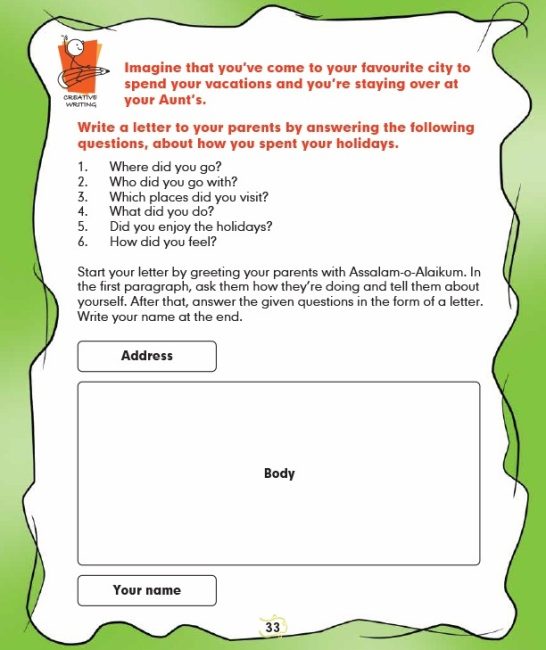
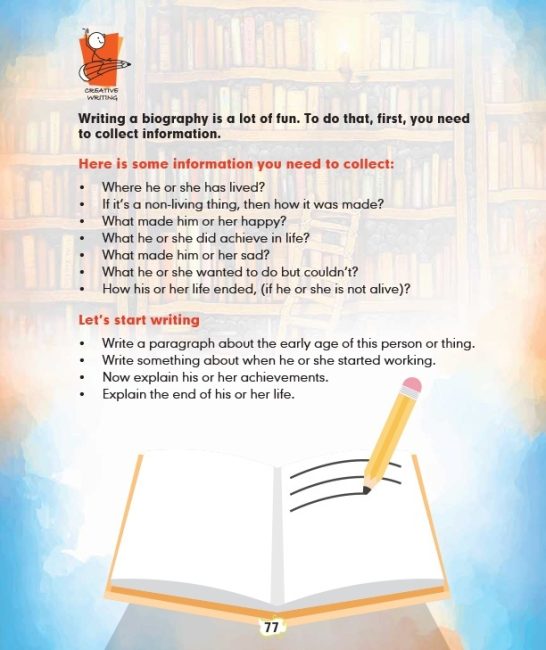
| 9. | Writing Text Types and Purposes: CCSS.ELA-LITERACY.W.3.1 Write opinion pieces on topics or texts, supporting a point of view with reasons. CCSS.ELA-LITERACY.W.3.1.A Introduce the topic or text they are writing about, state an opinions, and create an organizational structure that lists reasons. CCSS.ELA-LITERACY.W.3.1.C Use linking words and phrases (e.g., because, therefore, since, for example) to connect opinions and reasons. CCSS.ELA-LITERACY.W.3.2 Write informative/explanatory texts to examine a topic and convey ideas and information clearly. CCSS.ELA-LITERACY.W.3.2.A Introduce a topic and group related information together; include illustrations when useful to aiding comprehension. CCSS.ELA-LITERACY.W.3.2.B Develop the topic with facts, definitions, and details. CCSS.ELA-LITERACY.W.3.2.C Use linking words and phrases (e.g., also, another, and, more, but) to connect ideas within categories of information. CCSS.ELA-LITERACY.W.3.3 Write narratives to develop real or imagined experiences or events using effective techniques, descriptive details, and clear event sequences. CCSS.ELA-LITERACY.W.3.3.B Use dialogue and descriptions of actions, thoughts, and feelings to develop experiences and events or show the response of characters to situations. Production and Distribution of Writing: CCSS.ELA-LITERACY.W.3.4 CCSS.ELA-LITERACY.W.3.5 | Faruq and The Termite Dear Queen Ant Faruq and Termite Dear Queen Ant All chapters cover All chapters cover The Woodpecker and Irfan Most chapters cover Most chapters cover Most chapters cover Most chapters cover Most chapters cover Most chapters cover |
| 11. | Speaking and Listening Comprehension and Collaboration: CCSS.ELA-LITERACY.SL.3.1 |
The Woodpecker and Irfan |
| CCSS.ELA-LITERACY.SL.3.1.B Follow agreed-upon rules for discussions (e.g., gaining the floor in respectful ways, listening to others with care, speaking one at a time about the topics and texts under discussion). | All chapters cover | |
| 12. | Language:Conventions of Standard English:CCSS.ELA-LITERACY.L.3.1 | All chapters cover |
| CCSS.ELA-LITERACY.L.3.1.A Explain the function of nouns, pronouns, verbs, adjectives, and adverbs in general and their functions in particular sentences. | Most chapters cover | |
| CCSS.ELA-LITERACY.L.3.1.D Form and use regular and irregular verbs. | Dear Cousin Nibble | |
| CCSS.ELA-LITERACY.L.3.1.E Form and use the simple (e.g., I walked; I walk; I will walk) verb tenses. | Just Smile | |
| CCSS.ELA-LITERACY.L.3.1.G Form and use comparative and superlative adjectives and adverbs, and choose between them depending on what is to be modified. | Toy’s Escape The Woodpecker and Irfan | |
| CCSS.ELA-LITERACY.L.3.1.H Use coordinating and subordinating conjunctions. | Prophet Adam (A.S.) | |
| CCSS.ELA-LITERACY.L.3.2 Demonstrate command of the conventions of standard English capitalization, punctuation, and spelling when writing. | All chapters cover | |
| CCSS.ELA-LITERACY.L.3.2.A Capitalize appropriate words in titles. | All chapters cover | |
| CCSS.ELA-LITERACY.L.3.2.B Use commas in addresses. | Most chapters cover | |
| CCSS.ELA-LITERACY.L.3.2.C Use commas and quotation marks in dialogue. | Faruq and The Termite The Woodpecker and Irfan | |
| CCSS.ELA-LITERACY.L.3.2.E Use conventional spelling for high-frequency and other studied words and for adding suffixes to base words (e.g., sitting, smiled, cries, and happiness). | Hazrat Ibrahim (A.S.) & Hazrat Ismail (A.S.) |
How useful was this post?
Click on a star to rate it!
Average rating 0 / 5. Vote count: 0
No votes so far! Be the first to rate this post.