Common Core Standards Science Class 3
Students should be able to:
(as per Common Core Standards)
| S No. | Targets | Chapters |
| 1. | Reading: Literature Key Ideas and Details CCSS.ELA-LITERACY.RL.3.1 | Most chapters cover |
| CCSS.ELA-LITERACY.RL.3.3 Describe characters in a story (e.g., their traits, motivations, or feelings) and explain how their actions contribute to the sequence of events. | Digging Ants | |
| 2. | Craft and Structure CCSS.ELA-LITERACY.RL.3.4 |
All chapters cover |
3. | Integration of Knowledge and Ideas: CCSS.ELA-LITERACY.RL.3.7 | Most chapters cover |
4. | Range of Reading and Level of Text Complexity: CCSS.ELA-LITERACY.RL.3.10 | All chapters cover |
| 5. | Reading: Informational Text Key Ideas and Details: CCSS.ELA-LITERACY.RI.3.1 | Most chapters cover |
| CCSS.ELA-LITERACY.RI.3.2 Determine the main idea of a text; recount the key details, and explain how they support the main idea. | Most chapters cover | |
| CCSS.ELA-LITERACY.RI.3.3 Describe the relationship between a series of historical events, scientific ideas or concepts, or steps in technical procedures in a text, using language that pertains to time, sequence, and cause/effect. | Flying Robot | |
6. | Craft and Structure: CCSS.ELA-LITERACY.RI.3.5 | Most chapters cover |
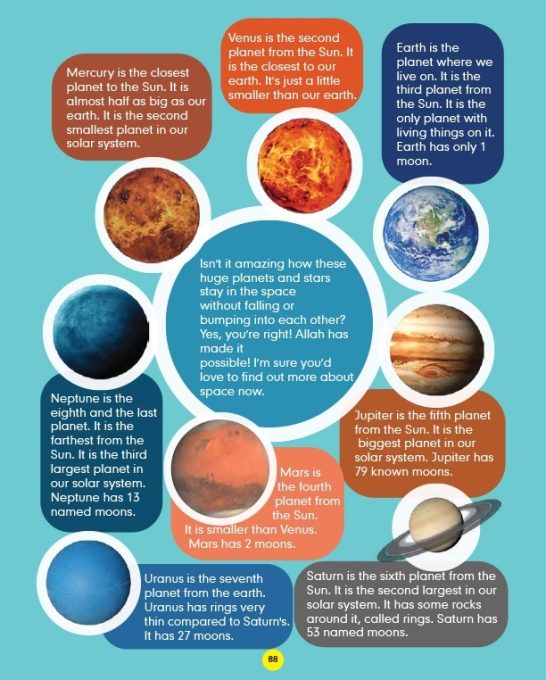
7. | Integration of Knowledge and Ideas: CCSS.ELA-LITERACY.RI.3.7 | Solar System |
| CCSS.ELA-LITERACY.RI.3.9 Compare and contrast the most important points and key details presented in two texts on the same topic. | Future Toys Turning trash into toys | |
8. | Range of Reading and Level of Text Complexity: CCSS.ELA-LITERACY.RI.3.10 | All chapters cover |
| 9. | Reading: Writing Text Types and Purposes: CCSS.ELA-LITERACY.W.3.1 | All chapters cover |
| CCSS.ELA-LITERACY.W.3.2 Write informative/explanatory texts to examine a topic and convey ideas and information clearly. | All chapters cover | |
| 10. | Research to Build and Present Knowledge: CCSS.ELA-LITERACY.W.3.7 | All chapters cover |
| CCSS.ELA-LITERACY.W.3.8 Recall information from experiences or gather information from print and digital sources; take brief notes on sources and sort evidence into provided categories. | All chapters cover | |
| 11. | Reading: Speaking & Listening Comprehension and Collaboration: CCSS.ELA-LITERACY.SL.3.1 | All chapters cover |
| CCSS.ELA-LITERACY.SL.3.1.A Come to discussions prepared having read or studied required material; explicitly draw on that preparation and other information known about the topic to explore ideas under discussion. | All chapters cover | |
| CCSS.ELA-LITERACY.SL.3.1.C Ask questions to check to understand of information presented, stay on topic, and link their comments to the remarks of others. | All chapters cover | |
| CCSS.ELA-LITERACY.SL.3.2 Recount or describe key ideas or details from a text read aloud or information presented orally or through other media. | All chapters cover | |
12. | Presentation of Knowledge and Ideas:CCSS.ELA-LITERACY.SL.3.4 | All chapters cover |
How useful was this post?
Click on a star to rate it!
Average rating 2 / 5. Vote count: 1
No votes so far! Be the first to rate this post.